
WELCOME BONUS 300%
UP TO €2000 + 100
FREE SPINS
UP TO €2000 + 100
FREE SPINS
Home → Blackjack
Blackjack at Mystake Casino: Variants, Rules and Payouts
Side Bets don't count towards bonus turnover
Side bets placed on Blackjack games do not contribute to the wagering requirements of the 300% welcome bonus up to €2,000. While some Blackjack variants offer side bets like Insurance, these wagers are excluded from the 10% game contribution rate applied to table games. This means any funds wagered on these additional bets will not reduce the overall turnover needed to unlock bonus funds. Players aiming to clear the bonus should focus on the main game action.
For example, placing a €10 Insurance side bet, which pays 2:1, does not count towards the €40,000 turnover required for a €1,000 bonus (assuming a 10% contribution). The total wagering requirement for the bonus is calculated based on main bets contributing 10%, meaning €40,000 turnover is needed for every €1,000 of bonus received. Players must be mindful of this exclusion to effectively manage their bonus.
Understanding this rule is crucial for players utilizing the welcome bonus. With a €2,000 maximum bonus, the total wagering requirement can reach €80,000 (€2,000 x 40). Any stakes on side bets, such as those in Blackjack Liberal Vegas Strip or Blackjack 6 Decks, will not chip away at this substantial figure, impacting the speed at which the bonus becomes withdrawable.
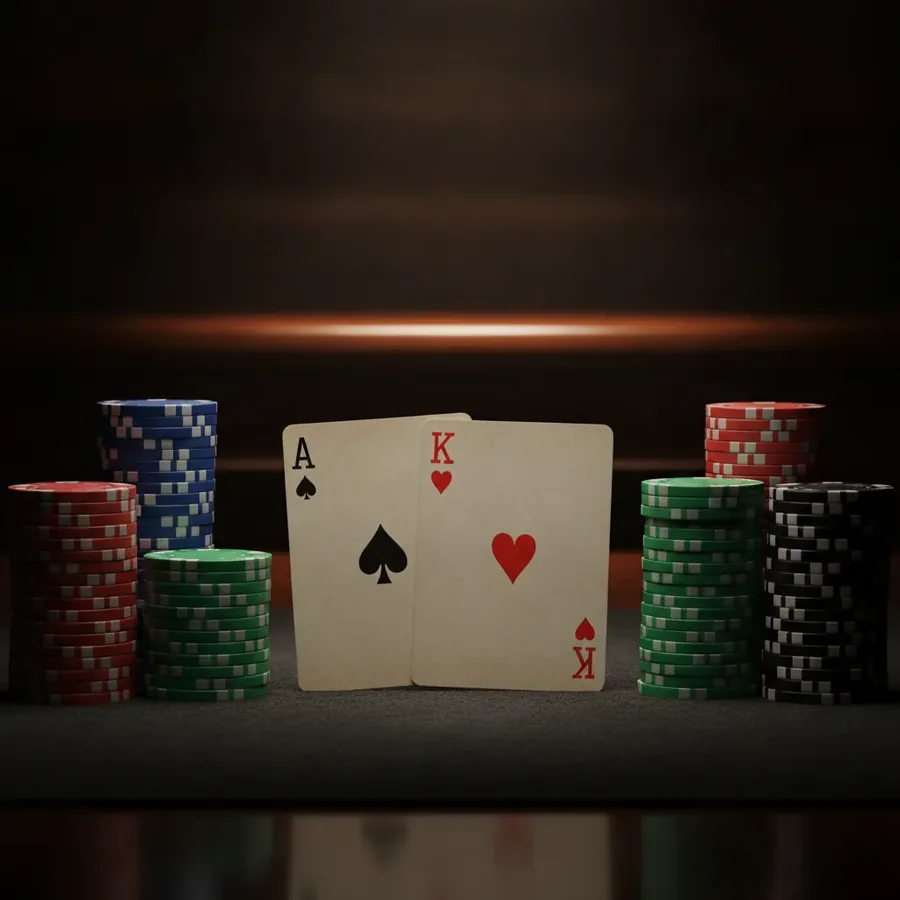
Side Bet Every Round: Budget Lasts 30 Rounds
If a player consistently places side bets on every round of Blackjack, their budget may only last approximately 30 rounds, depending on the stake. For instance, with a €10 stake per round and a €300 starting budget, this implies that only €300 is available for betting. This rapid depletion is particularly evident in games where side bets are frequent and can accumulate losses quickly.
Consider a scenario with a €10 bet per round and a €300 bankroll. If a player engages in side bets on each hand, and assuming these side bets also carry a house edge similar to or worse than the main game, the budget will diminish considerably faster than expected. This rapid decrease in funds means players might exhaust their budget within a short playing session.
For example, if a player on Blackjack Liberal Vegas Strip with its 0.28% house edge also opts for side bets, and if those side bets have a higher house edge, their €300 budget could be depleted within 30 rounds. This calculation highlights the impact of frequent side betting on budget longevity, suggesting a more conservative approach is advisable for extended play.
Split, Double Down, and Surrender in Numbers
The ability to split, double down, and surrender can significantly impact the house edge in Blackjack. For example, the Blackjack Liberal Vegas Strip variant allows splitting, doubling down, and late surrender, contributing to its low house edge of 0.28%. These rules are beneficial for players as they offer strategic options to improve hand outcomes and reduce potential losses.
Conversely, a game like Blackjack 6 Decks, S17, DAS, DOA, while offering a 3:2 payout, has a house edge of 0.46%. This variant permits doubling after splitting (DAS) and doubling on any two cards, which are advantageous rules. However, the absence of surrender means players cannot cut their losses in unfavorable situations, increasing the effective house edge compared to games with this option.
The rule allowing a player to surrender, as seen in Blackjack Surrender, reduces the house edge by approximately 0.08 percentage points. This option allows players to forfeit half their bet after the dealer checks for blackjack, providing a strategic escape.
Card Counting at Shuffle Master Table: why it fails
Card counting strategies are rendered ineffective at Shuffle Master tables because the continuous shuffling of cards negates the accumulation of known card distribution. Unlike traditional shoe games where cards are dealt from a finite deck, these automated systems constantly reintroduce used cards into play. This mechanism prevents a skilled player from accurately tracking the ratio of high to low cards remaining.
The fundamental principle of card counting relies on identifying when a shoe is rich in high cards, which favors the player. However, at a Shuffle Master, the constant shuffling means the composition of the deck is always reset, eliminating any statistical advantage a player might gain. Therefore, even with perfect counting, the edge gained from favorable card counts cannot be exploited.
For instance, a player aiming to capitalize on a high true count would find no discernible advantage at a Shuffle Master table. The system's design prioritizes a consistent house edge by ensuring that the card distribution never reaches a state where it significantly benefits the player. This design inherently prevents the success of card counting techniques in such environments.
What Percentage Does Blackjack Count Towards Bonus?
Blackjack games contribute 10% towards the wagering requirements of the 300% welcome bonus up to €2,000. This means that for every €10 wagered on Blackjack, only €1 counts towards the total turnover needed to clear the bonus. For example, to meet the €40,000 wagering requirement associated with a €1,000 bonus, players would need to wager €400,000 in total on Blackjack.
This 10% contribution rate applies to most table games, including variants like Blackjack Liberal Vegas Strip and Blackjack 6 Decks. To illustrate, a player wanting to wager the full €2,000 bonus amount would need to achieve a total turnover of €80,000 (€2,000 x 40). If they exclusively played Blackjack, this would necessitate a total of €800,000 in wagers (€80,000 / 10%).
Players should be aware that side bets, such as Insurance with its 2:1 payout, do not contribute to this 10% bonus turnover. The total bonus wagering requirement of 40 times the bonus amount applies. Therefore, focusing on the main game action in Blackjack is essential for players who wish to fulfill the bonus conditions efficiently.
Blackjack variants at a glance
| Variant | Payout | House edge | Rule | Bet range |
|---|---|---|---|---|
| Blackjack Liberal Vegas Strip (liberale Regeln, 3:2) | 99.72% | 0.28% | Günstigste Regelkombination: S17 + DAS + Resplit + Late Surrender. Standardabweichung 1,15 | Blackjack 3:2, Gewinn 1:1 |
| Blackjack Split / Double / H17 – Regel-Effekte | n.a. (Regel-Modifikatoren) | H17 +0.22 Prozentpunkte; RSA −0.08 Prozentpunkte; DAS −0.14 Prozentpunkte | Dealer Hits Soft 17 verschlechtert RTP um 0.22 Prozentpunkte; Resplit Aces verbessert um 0.08 Prozentpunkte; Double After Split verbessert um ca. 0.14 Prozentpunkte; 6 Decks statt 8 – ca. 0.02 Prozentpunkte. | Double – Einsatz ×2 mit einer Karte; Split – bis 4 Hände; Ass-Split meist mit einer Karte. |
| Blackjack Insurance / Versicherung (6–8 Decks) | 92.53% | 7.47% | Separate Nebenwette bis 50% der Hauptwette, wenn der Dealer ein Ass hat. Basisstrategie schreibt IMMER Ablehnung vor (außer Karten zählen bei True Count ≥ +3). Bei einem Deck Vorteil ≈ 5.88% | Insurance 2:1 |
| Blackjack Surrender (Late Surrender) – Regel-Effekt | n.a. (Regel-Modifikator) | −0.08 Prozentpunkte | Spieler gibt Hand nach Dealer-Blackjack-Prüfung auf, verliert die Hälfte des Einsatzes. Verbessert RTP um ca. 0.08 Prozentpunkte. Early Surrender ist wesentlich wertvoller (bis −0.6 Prozentpunkte), aber extrem selten. | Rückzahlung 50% des Einsatzes |
| Blackjack Auszahlung 6:5 statt 3:2 (6 Decks) | 98.15% | 1.85% | Ersatz von 3:2 durch 6:5 fügt exakt +1.39 Prozentpunkte zum Vorteil des Casinos hinzu – stärker als jede andere Regeländerung. Bei $10 Einsatz zahlt Blackjack $12 statt $15. | Blackjack 6:5, Gewinn 1:1 |
| Blackjack Ein Deck, klassische Regeln, 3:2 | 99.85% | 0.15% | Weniger Decks = niedrigerer Vorteil; ein Deck gibt ca. −0.48 Prozentpunkte gegenüber 8 Decks. Oft durch 6:5 Auszahlung kompensiert. | Blackjack 3:2, Gewinn 1:1 |
Ace Split: only one card per hand
Blackjack variants allowing Ace Splitting, such as 'Blackjack Ein Deck' with classic rules, permit splitting Aces. This specific rule modification improves the RTP by approximately 0.08 percentage points compared to standard play. For a player betting 100 EUR, this translates to a potential long-term return of 99.85 EUR.
While resplitting Aces (RSA) offers a minor RTP improvement of 0.08 percentage points, the 'Ace Split' rule itself typically restricts players to receiving only one additional card per split Ace. This limitation is a crucial aspect for players understanding the game's nuances, particularly in single-deck variations.
For players employing optimal strategy on games like 'Blackjack Ein Deck', this rule set, which includes Ace Splitting, contributes to a very low house edge. The consequence is that the casino retains an average of only 0.15% of all wagers over an extended period.
Highroller from 500 EUR per hand
Certain live dealer blackjack tables, such as 'Quantum Blackjack Plus Live' by Playtech, cater to high rollers with a maximum bet limit of 5,000 EUR per hand. This range begins with a minimum stake of 1 EUR, offering flexibility across different bankrolls.
For players engaging with stakes as high as 500 EUR per hand on tables like 'Lightning Blackjack' from Evolution, the potential for multipliers adds an exciting dimension. These multipliers can reach up to 25x on a winning hand, significantly amplifying payouts.
The availability of high staking options from 500 EUR up to 5,000 EUR on specific live tables means substantial sums can be wagered in a short timeframe. For instance, a player betting 500 EUR could theoretically win 12,500 EUR if a 25x multiplier applies to a winning hand.
Bonus 100 EUR with 10 percent credit
The welcome bonus offers a 300% match up to 2,000 EUR, plus 100 free spins. If a player deposits 100 EUR, they receive an additional 300 EUR in bonus funds, totaling 400 EUR for play. This bonus applies to initial deposits.
Wagering requirements for table games, including blackjack variants, are set at 10% of the bet amount contributing to bonus turnover. This means a 100 EUR bet on a table game only counts as 10 EUR towards meeting the wagering requirements.
To withdraw bonus winnings derived from a 100 EUR deposit bonus, a player would need to satisfy the wagering requirements. For example, if the wagering requirement is 40x, the total turnover needed would be 40 x 300 EUR = 12,000 EUR.
Unlimited seats via a split dealer hand
Live dealer blackjack variants, such as 'Lightning Blackjack' by Evolution, offer unlimited seats for players. This is achieved by providing a personal playing interface to each user, regardless of the physical number of seats at the table.
The concept of 'unlimited seats' means that players do not face waiting times due to occupied positions at the table. This is a significant advantage for players who wish to start playing immediately without delays, especially during peak hours.
While not directly related to a split dealer hand, the 'unlimited players' feature on 'Lightning Blackjack' and 'Quantum Blackjack Plus Live' ensures constant availability. This allows players to participate in games with potential multipliers up to 1,000x for combinations of 3 cards totaling 21.
Latency under 2 seconds at the live table
Live blackjack games are designed for low latency, aiming for response times under 2 seconds. This ensures a smooth and responsive gaming experience, crucial for fast-paced games like 'Lightning Blackjack' and 'Quantum Blackjack Plus Live'.
The minimal latency under 2 seconds at live tables is critical for players using optimal strategy on games like 'Quantum Blackjack Plus Live' with an RTP of 99.57%. Quick reactions are essential to capitalize on game features and multipliers.
A sub-2-second latency ensures that the player's actions are registered and reflected in the game almost instantaneously. This is particularly important for high rollers betting up to 5,000 EUR on 'Quantum Blackjack Plus Live', where every second counts for strategic play.
Soft Hand and Hard Hand Practically Distinguished
A soft hand in Blackjack, such as an Ace paired with a 5 (totaling 6 or 16), offers flexibility. The Ace can count as 11, making the hand 'soft' as it cannot bust if the next card is a 10-value card. For instance, with a soft 17, drawing a 6 results in 23, but the Ace reverts to 1, making the total 17.
Conversely, a hard hand has no Ace, or if an Ace is present, it must be counted as 1 to avoid busting. For example, a hand of 10 and 7 is a hard 17. If the player holds a 10 and an Ace, it is a soft 21. However, if the player has a 10 and a 7, and draws another 7, the hand becomes a hard 24 and busts.
Understanding this distinction is crucial for strategy, particularly when facing a dealer's upcard. For example, Blackjack Liberal Vegas Strip allows doubling down on any two cards, a rule that benefits from knowing if your hand is soft or hard. With a soft 16 (Ace and 5), doubling down is often advisable, whereas a hard 16 would typically be a stand.
Splitting costs double bet: plan budget
Splitting a pair of cards, such as two Eights, in Blackjack requires an additional bet equal to the initial wager. For example, if the initial bet is €50, splitting will cost another €50, bringing the total commitment to €100 for the two new hands. This effectively doubles the player's exposure on that turn.
This doubling of the bet is a significant factor when considering budget management. If a player has a €2,000 balance, placing €50 on a hand and then deciding to split Eights would instantly reduce their available balance by €100 if the split is exercised. This means a single split action can represent 5% of a €2,000 bankroll.
Games like Blackjack 6 Decks, S17, DAS, DOA with a 3:2 payout have rules that permit splitting. When planning for sessions at tables with a minimum bet of €10, a player needs to account for the potential of doubling their bet on splits. This means a single €10 bet could become €20 across two hands if a split is made.
Which table limits suit 20 EUR balance?
A €20 balance is extremely limited for most live casino table games. Considering a welcome bonus of 300% up to €2,000 plus 100 free spins, a player might be tempted by higher stakes, but the base balance is restrictive. Live Blackjack tables, such as Lightning Blackjack or Quantum Blackjack Plus Live by Evolution and Playtech respectively, often have minimum bets exceeding €20.
For a €20 balance, a player would need to seek out tables with exceptionally low minimum wagers, potentially below €1. Many standard Blackjack tables, even those not offering special features like multipliers, can start with bets of €5 or €10 per hand. For instance, Blackjack Party has a minimum bet of €1.00, which would be the only viable option for a €20 balance.
Even with a €1 minimum bet as seen on Blackjack Party, playing cautiously is essential. A €20 balance would only allow for 20 hands if no losses are incurred, making it difficult to leverage any welcome bonus effectively as bonus wagering requirements are typically high. For example, a 300% bonus means that for every €1 deposited, €3 is added, but this bonus money often requires significant wagering, such as 40 times the bonus amount.
Splitting Eights vs Standing on 16
Splitting a pair of Eights is a fundamental strategy in Blackjack, transforming a disadvantageous 16 into two potentially stronger hands. A hard 16 is notoriously difficult to play, as drawing any card higher than a 5 will result in a bust. The house edge for a basic Blackjack game is influenced by such strategic decisions.
Standing on a hard 16, however, is often the recommended play according to basic strategy, especially when the dealer shows a strong upcard like a 7, 8, 9, 10, or Ace. This is because the probability of the dealer having a better hand is high, and the risk of busting if hitting is also significant. For example, Blackjack 6 Decks, S17, DAS, DOA has a house edge of 0.46% when basic strategy is applied.
Splitting Eights, conversely, is generally advised because it offers a better chance of winning against the dealer's potential hands. By splitting, the player aims to create two hands, each with a better chance of reaching 18 or higher. This strategy is key to mitigating the house advantage, which can be as low as 0.28% in Blackjack Liberal Vegas Strip due to favourable rules.
Error insurance: 7 percent additional house edge
Blackjack Insurance is a side bet offered when the dealer's upcard is an Ace. It allows players to bet on whether the dealer has Blackjack, paying out at 2:1 if they do. However, taking this insurance bet, as recommended against by basic strategy, significantly increases the house edge.
The Blackjack Insurance side bet carries a substantial house advantage, estimated at around 7.47% for 6-8 decks. This means that for every €100 wagered on insurance, a player can expect to lose approximately €7.47 in the long run. This is considerably higher than the house edge of standard play in many Blackjack variants.
For instance, if a player has a €10 bet on the table and takes insurance when the dealer shows an Ace, they are essentially placing an additional bet of up to €5 (if the insurance payout is 2:1 on half the main bet). Opting for this 'error insurance' dramatically worsens the player's return, pushing the overall house edge up to 7.47%, compared to a much lower RTP of 92.53% for the main hand itself.
Contact
Live - online chat
Banking






Providers












Mystake Casino 2026