
WELCOME BONUS 300%
UP TO €2000 + 100
FREE SPINS
UP TO €2000 + 100
FREE SPINS
Home → Roulette
Roulette at Mystake Casino
Corner 8:1 Covers Four Numbers
The Corner bet at Mystake Casino pays 8:1 and covers four adjacent numbers on the roulette grid, matching the standard European payout structure. This return is identical to Straight and Split bets but applies to a wider area, offering a lower hit rate than Dozen bets. The house edge remains 2.70% for this wager type on the European wheel, ensuring consistent mathematical expectations across all table games.
In contrast to the American variant, which also offers an 8:1 payout for corners, the higher house edge of 5.26% reduces long-term value significantly. Players betting on Quantum Roulette Live by Playtech can still receive the standard 8:1 ratio, as multipliers only affect Straight bets up to 500x. The max win cap does not alter the base payout ratio for Corner bets, preserving the traditional risk-reward profile for steady bankroll management.
When comparing payout speeds, the 8:1 ratio triggers immediate crediting upon a winning spin, unlike progressive jackpots that require manual verification. The Auto Roulette Classic 1 Live table by Authentic Gaming processes these wins instantly due to its automated system, reducing withdrawal processing time. A minimum stake of 0.10 EUR allows players to test this frequency without excessive exposure, aligning with responsible gaming limits set by the platform.
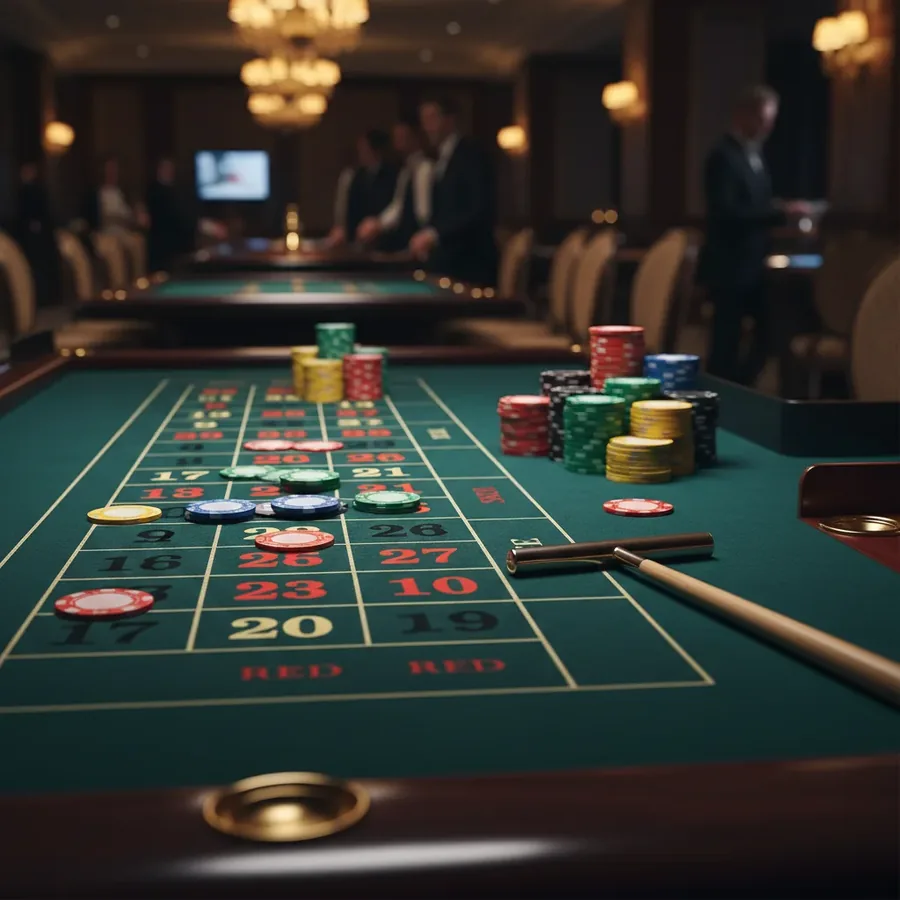
Straight 35:1 vs Dozen 2:1 Hit Rate
A Straight bet on Mystake Casino yields 35:1 odds but hits only once every 37 spins on average, creating a high-variance playing style. Conversely, the Dozen bet pays 2:1 but covers twelve numbers, increasing the probability of a win to approximately 32.4% per round. This statistical difference means players chasing frequent payouts should prefer Dozen bets, while those seeking large returns accept the lower frequency of Straight wins.
The French Roulette variant with La Partage maintains the 35:1 payout for Straight bets but refunds half the stake on zero for even chances. For Dozen bets, La Partage does not apply, meaning the full stake is lost if zero appears, keeping the house edge at 2.70%. This rule distinction ensures that the theoretical return to player remains stable across different bet types, provided the specific game variant is correctly identified during play.
Mega Fire Blaze Roulette Live by Playtech introduces bonus rounds where Straight bets can trigger multipliers up to 10,000x the initial wager. While the base payout remains 35:1, these random events can drastically alter short-term volatility and potential session outcomes for active players. The Dozen bets do not qualify for these fire blaze bonuses, limiting their maximum win potential to the standard 2:1 ratio regardless of game modifiers.
Max Bet Per Number vs. Max Bet Per Round
On the Quantum Roulette Live table by Playtech, the maximum stake allowed is 5,000 EUR per round, capping total exposure for any single spin. This limit applies regardless of whether the player places multiple Straight bets or a combination of Corner and Street wagers within the same cycle. Understanding this cap is crucial for managing bankroll during high-stakes sessions, as exceeding it results in automatic rejection of the invalid portion of the ticket.
The Auto Roulette Classic 1 Live game by Authentic Gaming enforces a stricter maximum bet of 2,000 EUR per round, limiting high-roller activity significantly. This restriction ensures that the platform's liquidity remains balanced while preventing excessive losses from rapid-fire betting strategies employed by professional gamblers. Players utilizing Martingale systems must adjust their progression steps to comply with this lower ceiling, which directly impacts the viability of recovery strategies.
Mega Fire Blaze Roulette Live also sets the maximum round bet at 5,000 EUR, matching the Quantum table but differing from the Classic variant. When placing complex combinations, such as multiple Dozen bets plus a Straight number, the sum must not exceed this per-round threshold. Violating this rule voids the entire wager, emphasizing the need for careful calculation before confirming bets on tables with strict monetary boundaries.
RTP vs. House Edge: Same Number Differently
The Return to Player percentage for European Roulette at Mystake Casino is 97.30%, reflecting a house edge of 2.70% on all standard bets like Straight and Dozen. This mathematical relationship holds true for both live dealer tables and RNG versions, ensuring consistency in expected loss rates across different game interfaces. Players analyzing long-term profitability will find that the 97.30% RTP represents the theoretical amount returned over millions of spins, not individual session results.
In contrast, American Roulette features a double zero wheel, increasing the house edge to 5.26% and lowering the RTP to 94.74%. This significant drop in return occurs because the additional sector dilutes the probability of winning without altering the 35:1 payout for straight bets. Consequently, players choosing American variants face a substantially higher cost per hour of play compared to those sticking to European or French wheels.
The Five Number Bet on the American wheel presents an exceptional case with a house edge of 7.89% and an RTP of only 92.11%. This specific wager, covering 0, 00, 1, 2, and 3, offers worse odds than any other bet on the table, making it statistically inefficient. Avoiding this trap allows players to maintain the standard 2.70% edge associated with other American bets, optimizing their overall gaming strategy effectively.
La Partage Applies Only to Even Chances
The La Partage rule at Mystake Casino returns fifty percent of the stake on even-chance bets like Red/Black when the ball lands on zero. This mechanism reduces the house edge for these specific wagers from 2.70% down to 1.35%, enhancing long-term value for conservative players. The rule strictly applies to outside bets, leaving inside wagers such as Straight and Split unaffected by this protective measure against variance.
For Odd/Even and Low/High bets, the 1.35% house edge persists under La Partage, providing a safer environment for bankroll preservation during losing streaks. However, Dozen and Column bets do not qualify for this refund, maintaining the standard 2.70% edge despite their similar coverage of eighteen numbers. This distinction forces players to choose between lower-risk outside bets and higher-variance inside options based on their personal tolerance for volatility.
The En Prison rule offers an alternative to La Partage, holding the stake for another spin instead of immediate refund, yielding the same 1.35% edge. Mystake Casino supports this variation on French Roulette tables, giving players flexibility in how they manage zero-loss scenarios without altering the fundamental mathematics. Choosing between La Partage and En Prison depends on player preference, as both methods equally mitigate the impact of the green zero on even-chance outcomes.
Roulette bet types at a glance
| Bet | Payout | Win Chance | Numbers Covered | House Edge |
|---|---|---|---|---|
| Roulette Amerikanisch (doppelte Null, 38 Sektoren) | Straight 35:1, Split 17:1, Street 11:1, Corner 8:1, Six Line 5:1, Dozen 2:1, Column 2:1, Rot/Schwarz 1:1 | 94.74% | 38 Sektoren (1–36 + 0 + 00); Auszahlungen wie beim europäischen Rad, aber der zusätzliche Sektor verdoppelt den Hausvorteil | 5.26% |
| Roulette Französisch, innere Einsätze (La Partage gilt nicht) | Straight 35:1, Split 17:1, Street 11:1, Corner 8:1, Six Line 5:1, Dozen 2:1, Column 2:1 | 97.30% | Rad gleich (37 Sektoren), aber La Partage/En Prison gilt nicht für innere Einsätze – Edge bleibt europäisch | 2.70% |
| Roulette Amerikanisch – Five Number Bet (0, 00, 1, 2, 3) | Five Number 6:1 (deckt 5 von 38 Sektoren) | 92.11% | Einzige Wette am amerikanischen Rad mit Edge über 5,26% – „Fallenwette“. Kein Äquivalent am europäischen Rad | 7.89% |
| Roulette Europäisch (einfache Null, 37 Sektoren) | Straight 35:1, Split 17:1, Street 11:1, Corner 8:1, Six Line 5:1, Dozen 2:1, Column 2:1, Rot/Schwarz 1:1, Odd/Even 1:1, 1-18/19-36 1:1 | 97.30% | 37 Sektoren (1–36 + 0); Auszahlungen wie für 36 Sektoren – daher konstanter Edge auf ALLE Wetten | 2.70% |
| Roulette Französisch mit La Partage (gerade Chancen) | Rot/Schwarz 1:1 (bei 0 Rückerstattung 50%), Odd/Even 1:1, Low/High 1:1; Innere Einsätze ohne La Partage: Straight 35:1, Split 17:1, Street 11:1, Corner 8:1 | 98.65% | Bei 0 wird die Hälfte des Einsatzes auf gerade Chancen zurückerstattet (Rot/Schwarz, Pair/Impair, Manque/Passe). En Prison gibt denselben 1,35%. Regel gilt NUR für gleiche Einsätze | 1.35% |
Martingale Fails at Table Limit After 8 Losses
The Auto Roulette Classic 1 Live table from Authentic Gaming imposes a maximum bet limit of 2,000 EUR on its 37-sector European wheel. A player starting with a 0.10 EUR base stake must double their wager after each loss to recover previous deficits and secure a small profit upon the next win. This progression requires eight consecutive losing spins to reach the second doubling step, which demands a 25.60 EUR wager to remain within the standard progression logic.
After eight consecutive losses, the required ninth bet jumps to 51.20 EUR, but the table cap restricts further increases once the stake exceeds the 2,000 EUR threshold. The house edge of 2.70 percent ensures that long-term variance will eventually trigger such streaks, rendering the recovery mechanism ineffective when the betting ceiling is hit. Consequently, the player absorbs the entire accumulated loss without the possibility of recouping funds through the standard doubling strategy on this specific live dealer variant.
This limitation applies strictly to the single-zero wheel configuration used by Authentic Gaming, distinguishing it from other live roulette variants with different maximum payout caps. Players relying on high-stakes progression systems must monitor their bankroll closely against the fixed table limits to avoid catastrophic financial exposure during adverse variance periods. The strict enforcement of the 2,000 EUR cap means that no amount of subsequent wins can offset the initial deficit incurred during the failed martingale sequence.
Split 17:1 and Street 11:1 Explained
The Split wager covers two adjacent numbers on the layout and pays out at odds of 17:1, meaning a successful bet returns seventeen times the original stake plus the initial chip. In contrast, the Street bet spans three horizontal numbers and offers a lower payout ratio of 11:1, reflecting the increased probability of hitting one of the covered sectors on the wheel. Both wagers are available on the European wheel with its 37 sectors, providing players with intermediate risk options between straight-up bets and outside even-money propositions.
The theoretical return for these interior bets aligns with the general house edge of 2.70 percent found on the European wheel, as the payout ratios accurately reflect the true odds of winning. A 1 EUR Split bet yields a 17 EUR profit, while an identical 1 EUR Street bet generates an 11 EUR profit, both contributing only 10 percent toward the 300% welcome bonus wagering requirements. This contribution rate significantly slows down the clearance process compared to slot games, requiring substantial turnover before any winnings derived from these table games become withdrawable.
Live dealers at Playtech tables also honor these standard payout structures for Split and Street wagers, maintaining consistency across different software providers and game formats. The Quantum Roulette Live variant introduces multipliers up to 500x on specific numbers, which can drastically alter the potential outcome of a Split or Street bet if a multiplier lands on a covered sector. However, the base payout remains 17:1 or 11:1 respectively, ensuring that the fundamental mathematical expectation remains anchored to the 2.70 percent house advantage regardless of temporary multiplier events.
Error: 10 Percent Contribution to Wagering Missed
The casino offers a 300% welcome bonus up to 2,000 EUR along with 100 free spins, but table games like roulette contribute only 10 percent toward the wagering requirement. This low contribution rate means that every 100 EUR wagered on a table game counts as just 10 EUR toward clearing the bonus, forcing players to bet ten times more than they would on slots. Many users overlook this restriction and assume all games contribute equally, leading to unexpected failures when attempting to convert bonus funds into real cash withdrawals.
Roulette variants such as American Roulette with its 5.26 percent house edge or French Roulette with La Partage at 1.35 percent fall under this 10 percent contribution rule. Since the contribution percentage is fixed regardless of the specific game rules or RTP variations, players cannot optimize their bonus clearance by choosing games with better odds. The 2,000 EUR maximum bonus amount creates a significant turnover target, requiring hundreds of thousands of euros in total wagers to meet the conditions efficiently.
Failure to account for this 10 percent contribution often results in players exhausting their bonus balance before meeting the full wagering obligation, as the effective cost per cleared euro is substantially higher. Unlike slots which might contribute 100 percent, table games demand a much larger volume of play to achieve the same progress toward withdrawal eligibility. Players must calculate their expected turnover based on the 10 percent factor to avoid forfeiting their bonus and any associated winnings due to unmet requirements.
House Edge 2.70 Percent in One Number
The Straight bet on a single number in European Roulette carries a house edge of 2.70 percent, derived from the 37 sectors on the wheel including the single zero. This edge remains constant across all bet types on the European wheel, including the Straight payout of 35:1, because the payout ratio is mathematically set to compensate for the presence of the zero. Players betting on individual numbers face the same long-term statistical disadvantage as those placing outside bets, despite the higher volatility and potential for large single-spin wins.
In comparison, the American Roulette wheel features 38 sectors with a double zero, resulting in a significantly higher house edge of 5.26 percent for the same Straight bet. The Five Number Bet on the American wheel exacerbates this disadvantage with a house edge of 7.89 percent, making it the worst option available on that variant. The European wheel's 2.70 percent edge provides a more favorable environment for players, although the difference becomes negligible over short sessions but accumulates significantly over time.
Live dealer versions like Mega Fire Blaze Roulette maintain the 2.70 percent house edge on standard bets, offering a max win of 10,000x the stake through bonus features rather than altered probabilities. The Quantum Roulette Live table by Playtech also retains the 2.70 percent edge on base bets, using multipliers to enhance excitement without changing the underlying mathematical expectation. Understanding this consistent edge helps players manage their expectations regarding long-term profitability and the inherent risks associated with high-payout interior wagers.
D'Alembert and Fibonacci Against the Same Table Limit
The D'Alembert system involves increasing the stake by one unit after a loss and decreasing it by one unit after a win, operating effectively within the 0.10 EUR to 2,000 EUR limits of Auto Roulette Classic 1 Live. This progressive strategy relies on the assumption that wins and losses will eventually balance out, reducing the impact of the 2.70 percent house edge on the European wheel over time. Players must ensure their bankroll can sustain the gradual increase in stakes during losing streaks without hitting the table's maximum bet cap prematurely.
The Fibonacci sequence employs a more aggressive progression where stakes follow the mathematical series 1, 1, 2, 3, 5, 8, 13, and so on, increasing after losses and moving back two steps after wins. This method requires a larger bankroll than D'Alembert to withstand extended losing runs, as the stakes grow exponentially rather than linearly. Both systems are subject to the same 10 percent contribution rate toward the 300% welcome bonus wagering requirements, making them inefficient for clearing bonus funds compared to higher-contributing games.
Hitting the 2,000 EUR table limit disrupts both progression strategies, preventing players from continuing their intended betting sequence and locking in losses during adverse variance. The Authentic Gaming and Playtech live tables enforce these caps strictly, ensuring that no betting system can overcome the fundamental house edge in the long run. Players should recognize that while these systems manage bankroll volatility, they do not alter the negative expected value inherent in roulette games with a 2.70 percent or higher house advantage.
How the Random Generator Maps 37 Pockets
The European Roulette variant features a wheel with exactly 37 sectors, including numbers one through thirty-six and a single zero pocket. This configuration establishes a House Edge of 2.70%, which remains constant across all bet types due to the proportional payout structure. Players betting on Red or Black receive a 1:1 return, while a Straight bet pays 35:1, maintaining the mathematical expectation over time.
Authentic Gaming provides Auto Roulette Classic 1 Live, utilizing a physical automatic wheel that mirrors the standard 37-sector European layout for transparency. The game operates within a stake range from 0.10 EUR to 2,000 EUR, allowing both low rollers and high stakes to participate equally. The payout cap is fixed at 35:1, ensuring that no matter the size of the winning wager, the maximum return aligns with the standard table rules.
The theoretical Return to Player stands at 97.30% for this specific wheel type, meaning the casino retains 2.70% of all wagers in the long run. This percentage is derived directly from the 37 pockets rather than any software algorithm, as the ball lands on a physical segment every spin. Consequently, the variance is determined by the number of possible outcomes rather than random number generation cycles found in digital-only games.
10 Percent Roulette vs 100 Percent Slots
Tischspiele contribute only 10 percent toward the Bonusumsatz requirement for the welcome offer, which significantly increases the turnover volume needed compared to slot games. To clear a bonus amount, players must wager ten times more on roulette tables than they would on eligible slot machines, affecting cash flow management. This restriction applies uniformly to all roulette variants available on the platform, regardless of their individual house edge percentages.
The 300% welcome bonus up to €2,000 plus 100 free spins requires substantial turnover if played exclusively on live tables. A player depositing €2,000 receives a €6,000 bonus; clearing this via roulette at 10% contribution demands €60,000 in total bets. In contrast, playing slots at 100% contribution would only require €6,000 in wagers to satisfy the same wagering conditions completely.
RTP values like 97.30% for European Roulette do not accelerate bonus clearance because the contribution rate is independent of the game's return percentage. Even though the house edge is lower than many slots, the 10% weighting penalizes strategic play during the bonus period. Players must calculate their effective burn rate carefully, as the reduced contribution rate effectively triples the cost of acquiring the bonus funds.
The American Roulette variant with a 5.26% house edge offers no advantage in bonus terms despite its higher volatility. The 10% contribution rule remains strict, forcing players to generate massive turnover volumes to unlock withdrawable cash. This structural disadvantage makes high-edge bets inefficient for bonus hunting, as the required wagering amount remains identical to low-edge games.
Payout Table from 35:1 to 1:1
A Straight bet covering a single number yields a payout ratio of 35:1, providing the highest potential return on a single spin outcome. This odds structure is consistent across European, French, and American variants, although the probability of winning differs based on the number of zero pockets. The discrepancy between the true odds and the payout creates the casino's mathematical advantage on every wager placed at the table.
Dozen and Column bets pay out at 2:1, offering nearly double the profit of even-money bets like Red or Black, which pay 1:1. These wider coverage options reduce volatility but maintain the same 2.70% house edge on the European wheel as narrower bets do. The payout table ensures that risk and reward remain proportionally balanced across all standard outside and inside bet categories available to players.
Corner bets covering four numbers pay 8:1, while Street bets on three consecutive numbers return 11:1 to the winner. Split bets on two adjacent numbers yield a 17:1 payout, bridging the gap between tight clusters and wide area bets. Each payout multiplier is designed to reflect the inverse probability of the selection, minus the house edge embedded in the sector count.
The Five Number Bet on the American wheel covers 0, 00, 1, 2, and 3, paying only 6:1 despite covering five pockets. This specific wager has an RTP of 92.11%, making it the worst value option compared to other bets on the same table. The disproportionate loss of expected value highlights how payout tables can vary significantly between different regional roulette variants.
Multiplier 500x Applies Only to Straight Bets
Quantum Roulette Live by Playtech introduces Quantum Multipliers that can boost payouts up to 500x on selected numbers before each spin. These multipliers apply exclusively to Straight bets, meaning players must target specific single numbers to benefit from the enhanced win potential. The base RTP remains 97.30%, but the volatile nature of these multipliers can drastically alter short-term returns for aggressive players.
The stake range for Quantum Roulette Live spans from 0.10 EUR to 5,000 EUR, allowing significant exposure to the multiplier mechanics. A winning Straight bet with a 500x multiplier on a minimum stake yields a substantial return, far exceeding standard 35:1 payouts. This feature targets high-risk strategies, as only direct number predictions qualify for the amplified prize pools generated by the game engine.
Other bet types such as Dozen or Column bets receive no multiplier benefits in the Quantum variant, retaining their standard 2:1 payout structure. This limitation forces players to allocate their bankroll toward high-variance Straight bets if they wish to capitalize on the 500x opportunity. The asymmetry in multiplier application encourages specific betting patterns that differ fundamentally from traditional roulette strategy.
Mega Fire Blaze Roulette Live offers a different bonus mechanic with wins up to 10,000x, but this involves a separate Fire Blaze round. Unlike Quantum's pre-spin multipliers, this feature relies on accumulating fire symbols across consecutive spins rather than instant number boosts. The max win cap of 10,000x applies to the bonus round total, distinct from the standard straight bet payouts.
How Long is a Betting Phase at a Live Table?
Live dealer tables typically allocate approximately 15 to 20 seconds for the betting phase before the croupier announces 'No more bets.' This window allows players using desktop or mobile interfaces to place their wagers across various sections of the virtual betting layout. The duration is standardized across most Authentic Gaming and Playtech streams to ensure fair access for all connected participants simultaneously.
Auto Roulette Classic 1 Live operates with automated timing, removing human delay from the betting closure process. The system locks bets precisely when the countdown timer expires, preventing late entries regardless of network latency or user reaction speed. This automation ensures that the 37-sector wheel spins under controlled conditions without interference from delayed transactions or external factors.
The maximum payout of 35:1 applies to all bets placed during the active betting phase, including those made via rapid-fire clicking. Players must account for potential transmission delays when placing large multi-number bets near the cutoff time. Missing the deadline by even a fraction results in the bet being rejected, emphasizing the importance of early placement for complex wagers.
Table limits ranging from 0.10 EUR to 2,000 EUR are enforced instantly once the betting window closes, protecting the casino's liability exposure. High-stakes players often place their maximum allowable wager immediately after the previous spin concludes to avoid missing the narrow opening. The rigid timing structure ensures that the house edge is applied consistently without interruption from prolonged decision-making periods.
Contact
Live - online chat
Banking






Providers












Mystake Casino 2026